In Aboriginal culture, Law, Land, Ceremony, and Kinship aren’t separate ideas. They are four deeply interconnected pillars that form the entire foundation of traditional Indigenous society, Ancestral Law, and the Dreaming. (1)
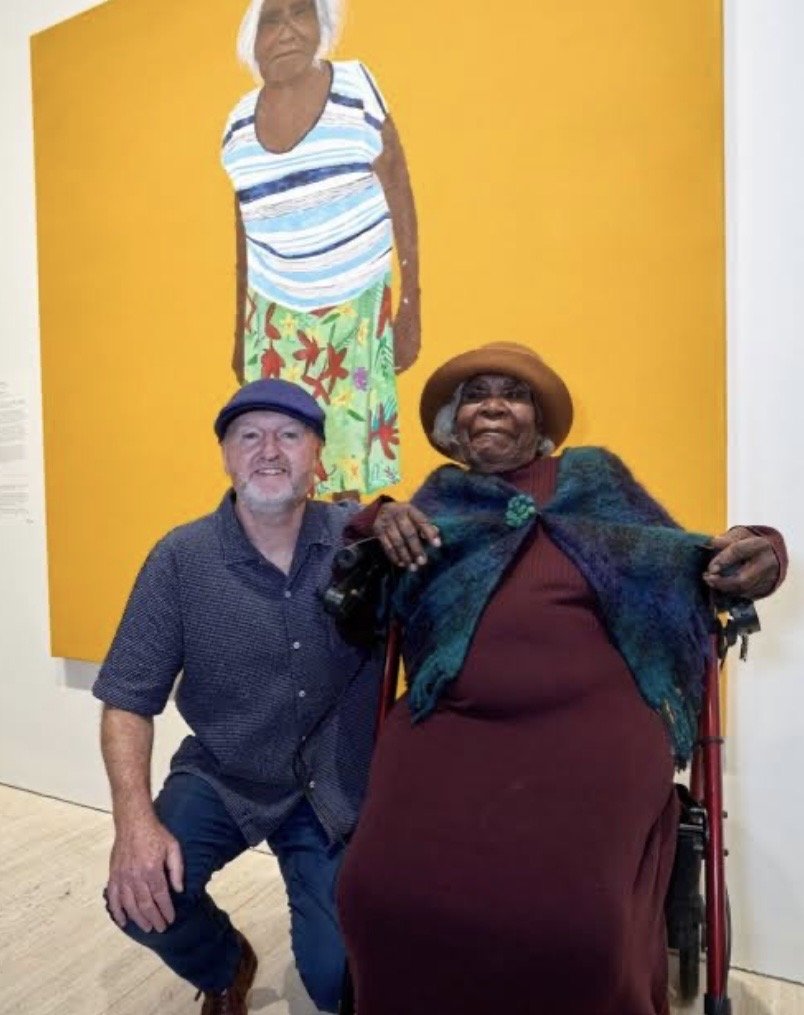
When Melbourne-based artist Richard Lewer won the 2026 Archibald Prize, it wasn't just a win for a beautiful painting. His portrait of Iluwanti Ken, a senior Pitjantjatjara artist and leader at Tjala Arts, is a profound look at a woman who has dedicated her entire life to upholding these exact pillars.
The Four Pillars Explained
To really understand Lewer's work, it helps to look at how Indigenous cultural awareness authorities, like Evolve Communities, define this cultural framework:
Law (or Lore): This is the unwritten, eternal system of rules, ethics, and governance established during the Creation Time. It guides everything from how to care for the environment to human behaviour and marriage rules.
Land: Country isn't just property or a pretty landscape. It is a living, breathing entity embedded with Law. For First Nations people, the Land holds the stories, songs, and physical footprints of the Ancestors.
Ceremony: Rituals, dances, and songs act as a living legal archive. By performing ceremonies, the community keeps the Land alive, reactivates the Law, and passes sacred knowledge down to the next generation.
Kinship: This is a highly sophisticated social fabric that dictates a person's exact relationship to others and to the environment. Kinship maps out lifelong obligations, deciding who protects specific areas of Land or who holds the right to perform certain Ceremonies. (1)
How Richard Lewer’s Work Connects
Lewer describes himself as a social realist. Historically, his work focuses on human suffering, social injustice, and some of the darker chapters of Australian history. His deep desire to explore human connection naturally led him to engage respectfully with the heavy realities carried by Indigenous families and Elders.
Never Shall Be Forgotten: A Mother's Story (2017)
Lewer’s engagement with First Nations themes often looks directly at systemic failures of justice. Commissioned for The National: New Australian Art, this project used lo-fi animation and drawing to chronicle the 1983 death of 16-year-old Yindjibarndi youth John Pat in police custody. By spending time and embedding himself with Pat’s family, Lewer visually documented the enduring pain, collective grief, and kinship obligations of John's mother, Mavis Pat, as she demanded accountability and kept his memory alive. The physical work is now preserved in the permanent collection of the Art Gallery of New South Wales.
The History of Australia (2018)
This major nine-panel work, painted on industrial metals like steel, copper, and brass, directly contrasts Western legal frameworks with Indigenous systems. Held in the permanent collection of the Art Gallery of South Australia, the work moves chronologically from pre-colonisation through to modern civil conflicts like the Cronulla riots. It critiques how British colonial "law" systematically attempted to fracture the pre-existing Law, Land, and Kinship systems of First Nations peoples.
The 2026 Archibald Prize Win: Iluwanti Ken
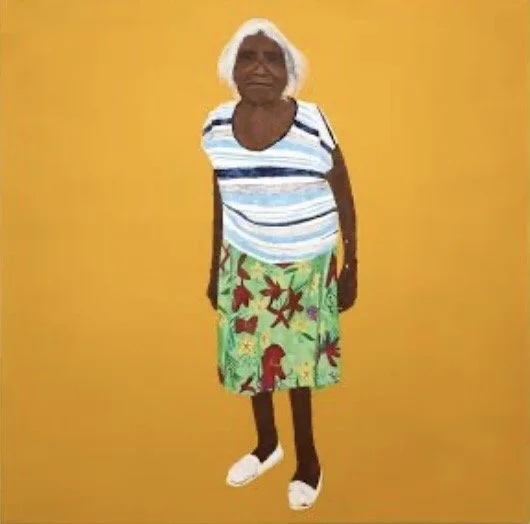
Lewer’s ultimate study of these values comes together in his portrait of Iluwanti Ken, a highly respected Pitjantjatjara Elder, senior artist, and ngangkari (traditional healer) from the Aṉangu Pitjantjatjara Yankunytjatjara (APY) Lands.
As highlighted by the Art Gallery of New South Wales, the portrait reflects a beautiful intersection of the pillars:
Understanding Kinship and Care: Lewer spent a prolonged, immersive period with Ken at Tjala Arts in Amata, South Australia. Through sharing tea, walking, and listening to her talk about family and loss, Lewer experienced firsthand the immense weight an Elder carries, the heavy cultural responsibility to protect fragile knowledge and look after the community.
Evoking Land and Country: The life-size portrait features Ken set against a vibrant, raw yellow ochre background. This choice of palette was directly inspired by the intense heat and radiant light of her physical Country.
Honouring Law and Authority: Ken's personal art practice is traditionally informed by the walawuru tjukurpa (the Eagle Dreaming story), a fundamental narrative governing protection and resilience. Through his stripped-back, non-sentimental style, Lewer succeeded in capturing her "quiet authority," translating an individual portrait into a profound acknowledgement of an Elder executing her ancestral Law.
References:
Never Shall Be Forgotten: A Mother’s Story 2017– Drawn Animation & Drawing. (Art Gallery of NSW Collection)
The History of Australia 2018 – Nine-panel oil on Steel, Copper, and Brass. (Art Gallery of South Australia Collection)
Iluwanti Ken 2026– Synthetic Polymer paint on Canvas. (Art Gallery of NSW – 2026 Archibald Winner)
(1) Evolve Communities n.d., What is Aboriginal Law?, Evolve Communities Pty Ltd
Iluwanti Ken, 198cmx198cm. Synthetic Polimer Paint on Canvas.
Marian Bosch – October 2026